Brown Eggs vs White Eggs in Pakistan: Is There Any Real Difference?
Brown eggs vs white eggs in Pakistan: nutritionally identical, shell colour is breed genetics. Why brown costs Rs 100-150 more a dozen and when to skip it.
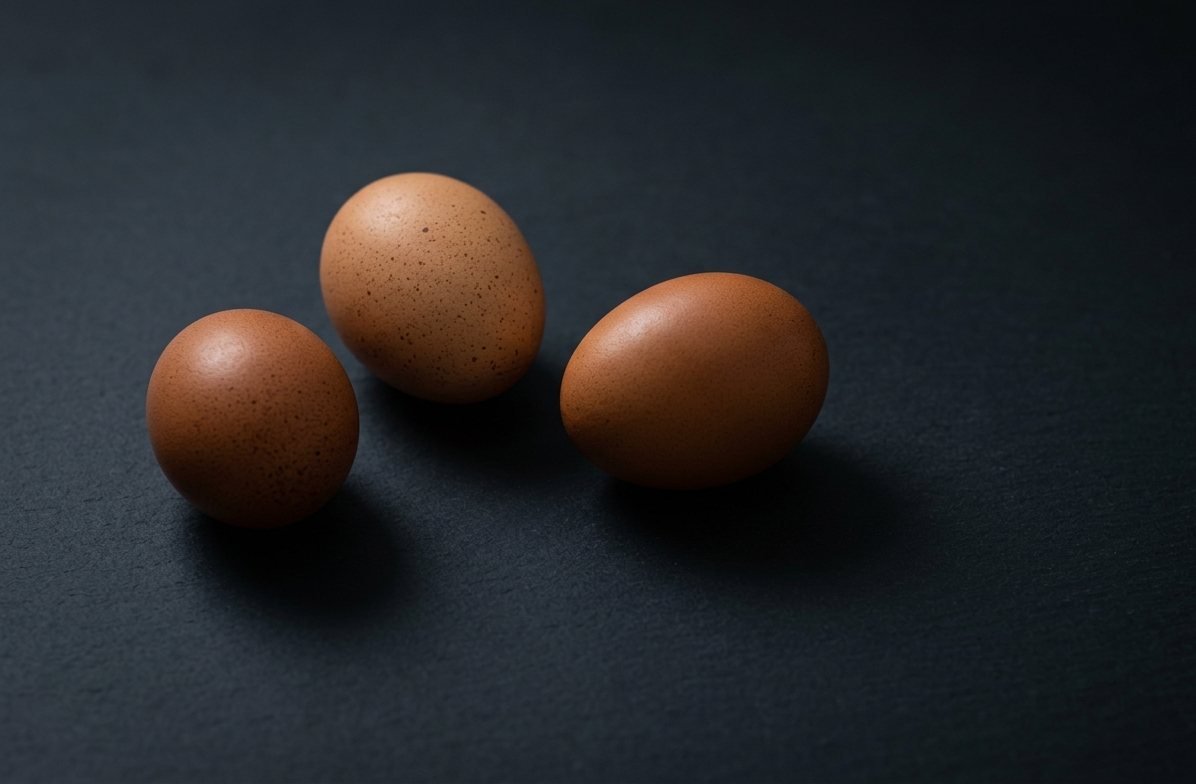
Brown eggs and white eggs are nutritionally identical when they come from the same farming system and eat the same feed. Shell colour is decided by the hen’s breed — it is genetics, not quality, and it says nothing about what is inside the egg. In Islamabad in 2026, brown commercial eggs sell for around Rs 400 a dozen against Rs 250–300 for white ones, and that extra Rs 100–150 buys a browner shell, nothing more.
That is the whole answer, and it is worth sitting with, because the brown premium in Pakistan is one of the most reliably paid and least examined mark-ups in the weekly shop. The longer story — why brown genuinely costs more to produce, why retail leans on the colour anyway, and what actually does change an egg — is below.
Why do brown eggs cost more if they are the same inside?
The price difference is real, but it is a cost difference, not a quality difference. The breeds that lay brown eggs are, on the whole, bigger-bodied birds than the white-egg breeds used in commercial sheds. A bigger bird eats more feed every day of its life, and feed is generally reckoned at 60–70 per cent of the cost of producing an egg. A hen that eats more but lays the same number of eggs produces a more expensive egg — regardless of what that egg looks like or tastes like.
So the farmer charging more for brown eggs is not necessarily cheating anyone. The hen really did cost more to keep. The problem is what happens at the retail end, where a higher price stops being presented as “this bird eats more” and starts being presented as “this egg is better”. The first claim is true. The second is not.
What decides shell colour in the first place?
Breed, and only breed. Every eggshell starts out white, made of calcium carbonate. In brown-laying breeds, the hen deposits a pigment on the outer surface of the shell during the last few hours before the egg is laid. That is why the inside of a brown eggshell is pale — the colour is a coating, laid on at the end, not something that runs through the egg.
There is an old farmers’ rule of thumb that hens with white earlobes lay white eggs and hens with red earlobes lay brown ones. It has exceptions, but it makes the point: shell colour is written into the bird, the way feather colour is. A hen lays the same colour of egg her entire life. You cannot feed a hen into laying a browner egg; you can only breed one.
This is also why shell colour tells you nothing about the hen’s diet, her housing, or her health. Two hens in adjacent cages, eating from the same trough, can lay one white egg and one brown egg every day for years. The shells differ. Nothing else does.
The retail trick: selling brown as halfway to desi
Here is where the honest cost story turns into something less honest. Pakistani buyers associate desi eggs with darker, tinted shells, so a brown commercial egg borrows some of that association just by sitting on the shelf. Retail knows this. Brown eggs get placed nearer the “desi” sign, priced between white commercial and true desi, and sometimes labelled with words like “golden” or “farm fresh” that mean nothing in particular. The buyer is invited to read the colour as a step up the ladder towards desi.
It is not a step up the ladder. Brown does not mean desi. A brown commercial egg comes from the same caged, grain-fed system as a white one — the differences that make a desi egg what it is are covered in our comparison of desi and farm eggs, and shell colour is not on the list.
The impression can be completed from the inside, too. Commercial feed often includes pigments — marigold extract, canthaxanthin — that darken the yolk. Put a pigmented yolk inside a brown shell and you have an egg styled to look desi at every layer, laid by a hen that has never stood on grass. None of this is illegal, and in a country with no enforced organic or free-range certification, none of it is checked. The label is a claim; the colour is a costume.
What actually changes an egg
If shell colour changes nothing, what does? Three things, roughly in order of how much they matter:
- Feed and forage. What the hen eats ends up in the egg. A hen that forages — greens, seeds, insects — lays eggs with naturally deeper yolk colour and, most people find, a noticeably different flavour. This is the honest version of what yolk pigments imitate.
- Housing. Whether the hen lives in a cage or ranges outdoors determines whether foraging is even possible, and it drives the economics. A desi or desi-cross hen with outdoor access lays roughly 140–180 eggs a year; a caged commercial layer lays close to 300. Fewer eggs per hen is the real reason desi eggs cost what they do.
- The hen’s age. Younger hens lay smaller eggs with thicker shells; older hens lay bigger eggs with thinner ones. This affects both colours equally.
Notice what is not on the list. Shell colour is an output of breed, the same way the hen’s feather colour is. It sits at the very end of the chain and changes nothing upstream of it.
| Egg type (Islamabad retail, 2026) | Typical price per dozen | What the price reflects |
|---|---|---|
| White commercial | Rs 250–300 | Caged layers bred for output; lowest feed cost per egg |
| Brown commercial | Around Rs 400 | The same caged system, with bigger hens that eat more feed |
| Free-range desi | Rs 600–750 | Different breeds, outdoor housing, and 140–180 eggs per hen per year instead of nearly 300 |
Read the table from right to left and the pattern is plain: prices rise where the hen’s life and output genuinely differ, and the brown premium is the one rung on the ladder where the egg itself does not change.
When does paying the brown premium make no sense?
Almost always, if what you are buying is a commercial egg. Some plain cases:
- Baking and cooking. In an omelette, a cake, or a karahi, no test — taste, texture, or lab — separates a brown commercial egg from a white one. Blind tastings generally find people cannot tell them apart when the hens are raised the same way.
- Daily boiled eggs for the family. At two dozen a week, the brown premium is roughly Rs 800–1,200 a month spent on shell colour.
- Buying brown as a compromise on desi. This is the costliest mistake, because brown commercial is not partway to desi — it is standing on the same rung as white. If the desi price is the obstacle, the honest comparison is laid out in what desi eggs cost in Islamabad and why; if it still does not fit the budget, a white commercial egg is the sensible buy, and the difference is better spent elsewhere in the kitchen.
That last point costs egg farmers like us money to say, but it is true: nobody should pay a desi-shaped price for a commercial egg in a brown shell.
Is there any situation where brown vs white actually matters?
No. There is no cooking, storage, or nutrition decision that turns on shell colour. Studies comparing brown and white eggs from hens kept the same way generally find no meaningful nutritional difference — the differences that do show up in research track the hen’s diet and living conditions, never the shell.
The folklore says otherwise, so it is worth retiring two pieces of it. First, that brown shells are thicker and stronger: shell thickness follows the hen’s age and her calcium intake, not the shell’s colour. A young hen lays a hard-shelled egg whether it is brown or white; an old hen lays a thin-shelled one in both colours too. Second, that brown eggs keep longer: freshness has nothing to do with colour either, and it is easy to check for yourself with four simple tests that work on any egg.
If you want a rule to shop by, this is ours, and it applies to every egg we sell or do not sell: judge the egg by the hen’s life, not by the shell. On our own farm the flock is a mix of desi breeds, so a single tray carries shells from off-white to tinted brown — and every egg in it is priced the same, because the shade was never the point.
Try them yourself
Six-egg trial pack, Rs 300, delivered anywhere in Islamabad or Rawalpindi.