Why Egg Prices Rise in Winter in Pakistan
Why egg prices rise in winter in Pakistan: shorter days cut how many eggs hens lay just as demand doubles. The biology, the arithmetic and fair desi egg prices.
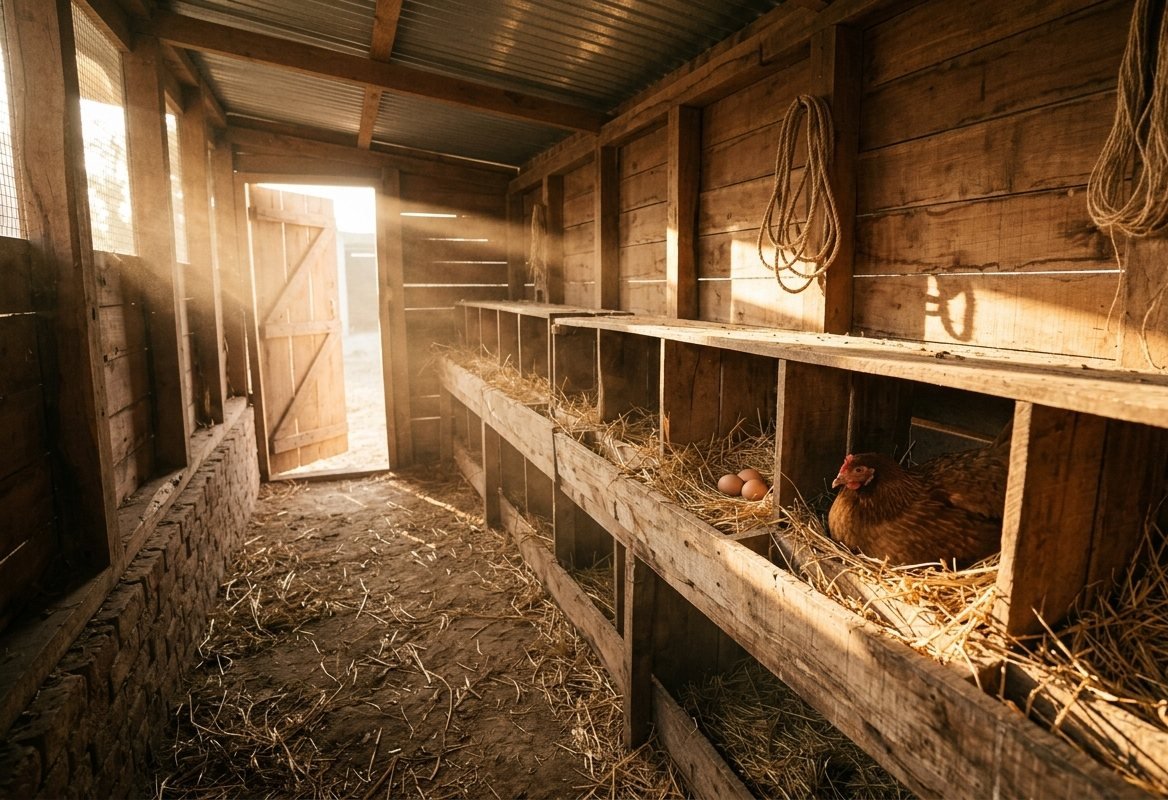
Egg prices in Pakistan rise every winter because two things happen at once: hens lay fewer eggs when the days get shorter, and people eat more eggs when the weather turns cold. Supply falls just as demand roughly doubles, and the price does what prices always do when that happens. Hoarding is real and makes the spike worse, but it rides on top of this squeeze — it does not create it.
This is worth understanding properly, because every January the same argument breaks out — on the news, in WhatsApp groups, at the tandoor — about who is to blame for Rs 30 eggs. The honest answer is less satisfying than a villain: most of the winter egg spike is biology plus appetite, and it would still happen if every trader in the country behaved perfectly.
Why do hens lay fewer eggs in winter?
A hen’s laying cycle is run by light, not temperature. Light reaching receptors in the hen’s brain drives the hormones that ripen and release a yolk, so the number of daylight hours she experiences sets how often she lays. Poultry science generally puts the threshold for peak laying at around 14 to 16 hours of light a day.
Islamabad gets roughly 14 hours of daylight in late June and roughly 10 hours in late December. That four-hour difference is the whole story. Below the threshold, a hen’s reproductive system slows down; some hens stop laying entirely and put their energy into moulting — replacing feathers — instead. None of this is illness or bad management; the bird is built to hatch chicks in spring, not in December fog.
Commercial layer sheds solve this with electricity. Bulbs on timers stretch the “day” to around 16 hours all year, so a caged commercial hen never experiences December at all. That is the main reason white eggs stay available in quantity through winter, and it is a legitimate technique, not a trick. An open-range flock, by definition, lives under the actual sky. There is no switch to flip.
Why does demand double at exactly the wrong time?
While supply is sagging, demand for eggs climbs steeply. Most people in the egg trade will tell you winter offtake runs roughly double the summer figure, and three habits drive it:
- Eggs as a warming food. In the desi framework of foods as garam or thanda, eggs sit firmly on the garam side — winter food, taken for warmth. Whether or not you accept that framework, millions of buying decisions follow it every cold morning.
- Dessert season. Halwa, custard, pudding, home baking — winter is when eggs go into sweets in bulk, and a single family batch of halwa can take half a dozen at once.
- Breakfast moves home. Cold mornings push people towards hot cooked breakfasts. The anda-paratha habit that pauses in June returns in November, across millions of households at the same time — and the roadside anda-channa and half-fry stalls that multiply each winter are buying from the same market you are.
None of this demand responds to price quickly. Very few households check the daily rate before deciding whether the children get an egg in January.
The arithmetic of the squeeze
Put the two curves together. Output from any flock living without artificial light falls — often by a third or more — through December and January. Demand roughly doubles over the same weeks. When supply falls and demand rises at the same time, the price moves further than either force would push it alone, because there is no slack left anywhere in the chain: the extra eggs people want simply do not exist.
The commercial sector cushions the supply side with lighting, which is why white egg prices rise noticeably but not wildly. Nothing cushions the demand side. So the squeeze repeats on schedule — building from mid-November, peaking around late December and January, easing by March — about as predictably as the motorway fog.
Why do desi eggs spike hardest?
Desi eggs start from a thinner supply base and lose more of it in winter. A caged commercial layer, under controlled light and formulated feed, produces close to 300 eggs a year. A desi or desi-cross hen ranging outdoors lays roughly 140 to 180 — about half — and that annual figure is spread unevenly across the seasons. Her best months are spring; her worst are December and January, when short days can pull an open-range flock’s output a third or more below its own average.
Meanwhile her costs do not fall with her output. She eats the same feed — slightly more, in fact, because a bird burning energy to keep warm eats more — and needs the same care and the same ground. Fewer eggs against the same feed bill means the true cost of each desi egg genuinely rises in winter. That is not a farmer’s excuse; it is division.
So the January buyer of desi eggs faces three stacked effects: the year-round yield gap that makes desi eggs dearer in the first place, a seasonal output drop that the commercial sector largely engineers away, and peak annual demand. The year-round comparison is covered in Desi Eggs vs Farm Eggs; the short version is that the desi price gap is mostly a yield gap, and winter widens it.
So is it hoarding or not?
Here is the claim plainly: the winter egg spike is mostly biology, not hoarding — but hoarding happens on top of it. Even with every cold store emptied and every wholesaler audited, egg prices would still rise every Pakistani winter, because hens are seasonal animals and buyers are seasonal too.
That said, a predictable shortage is an invitation. Stock held back a few extra days while the rate climbs, cartons moved into cold storage in November to resurface in January, retail prices that jump on a shortage headline before any real shortage arrives — all of this happens. The mistake is treating it as the whole explanation: blaming hoarders alone, as January news coverage tends to, implies the spike could be abolished by raids. It cannot. The biological part of the rise is permanent; only the opportunistic part on top is optional.
What is a fair winter price for desi eggs?
Baseline first. In Islamabad in 2026, white commercial eggs retail at roughly Rs 250–300 a dozen, brown commercial eggs at around Rs 400, and genuine free-range desi eggs from farms around the city at Rs 600–750 a dozen. What sits inside those numbers — feed, land, flock losses — is broken down in the desi egg price guide.
| Egg type | Typical Islamabad retail, 2026 | What winter does |
|---|---|---|
| White commercial | Rs 250–300 a dozen | Modest rise — lighting holds supply while demand climbs |
| Brown commercial | Around Rs 400 a dozen | Tracks white eggs; shell colour is breed, not season |
| Free-range desi | Rs 600–750 a dozen | Steepest rise — output drops just as demand peaks |
Now the fair-price arithmetic. If an open-range flock’s winter lay drops by a quarter to a third, the cost of each egg rises by roughly the same fraction. So a desi dozen that honestly sells at Rs 600–650 for most of the year can honestly reach the top of the normal band — Rs 700–750 — in December and January. What that arithmetic does not produce is a doubling. A “desi” dozen at Rs 1,100 or 1,200 in January is not covering anyone’s feed bill; it is charging what scarcity will bear, or it was never a true free-range desi egg to begin with.
How can a buyer smooth the winter spike?
A few practical points, roughly in order of usefulness:
- Commit before winter. A farm that knows its winter demand in October can plan flock and feed around it instead of gambling on the open market, which is why weekly subscriptions exist. Some farms hold subscriber rates flat through winter; we are one of them — a subscriber’s January dozen costs what it did in October. Details are on the egg subscription page.
- Buy larger packs, less often. Per-egg rates are almost always better on a full tray than on a half-dozen, and fewer purchases during the expensive months means fewer chances to meet an opportunistic price.
- Store properly and waste nothing. Winter is the easiest season to keep eggs: a cool room holds an egg well for two to three weeks, a fridge for longer. If a batch is of uncertain age, the checks in how to tell if an egg is fresh take about a minute.
- Be honest about what you need. If the budget is tight, the white commercial egg is honestly fine — the nutritional differences are modest, and it is the egg the winter spike touches least. Desi eggs are worth their price for the flavour and for how the hen lived, not because a commercial egg will fail you in the cold.
The winter spike, in short, is neither a scandal nor a mystery. It is what happens when a seasonal animal meets a seasonal appetite. Knowing which part of the January price is daylight, which part is demand, and which part is opportunism will not make eggs cheap — but it does tell you which sellers to trust when spring brings the rate back down.
Try them yourself
Six-egg trial pack, Rs 300, delivered anywhere in Islamabad or Rawalpindi.