Desi Murgi Yakhni: The Recipe, the Right Bird, and What It Really Does
Desi murgi yakhni recipe for one bird: why an older hen’s broth sets to a jelly, open pot vs pressure cooker times, and what the evidence says about colds.
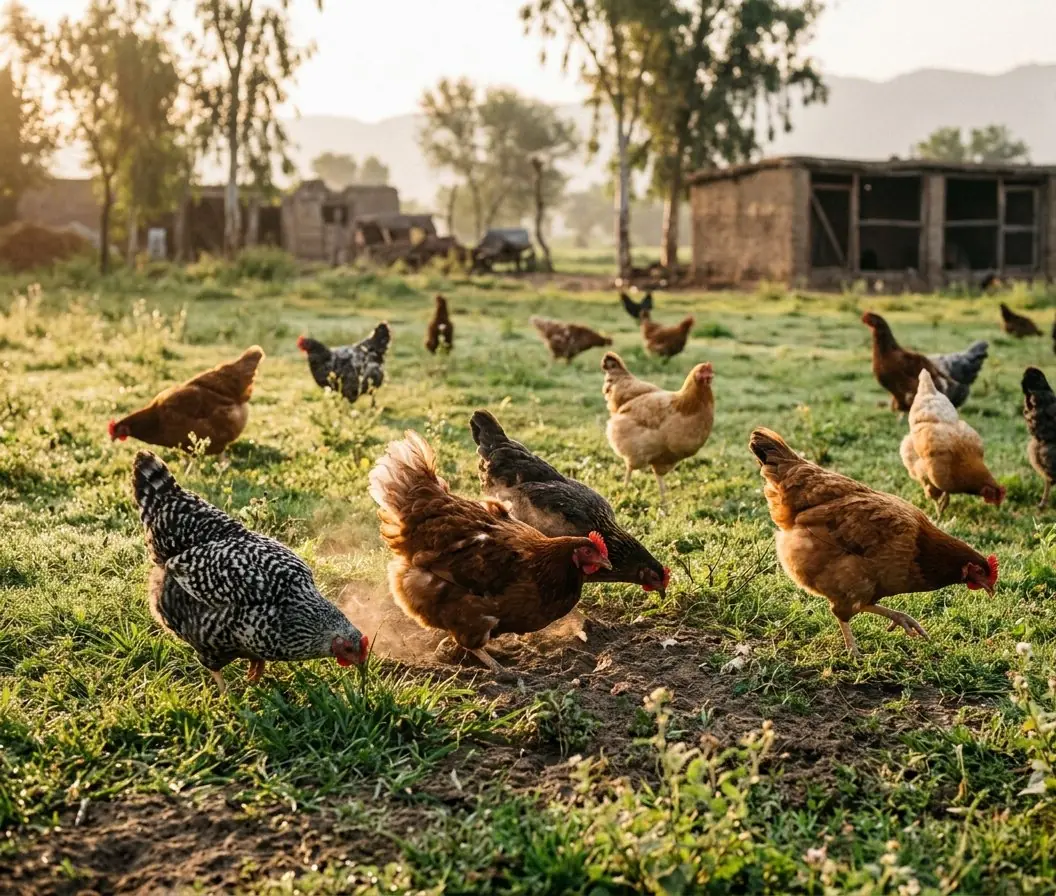
Desi murgi yakhni is a clear broth made by simmering one older desi hen, bones in, with onion, garlic, ginger and whole spices — about three hours in an open pot, or about 45 minutes in a pressure cooker — until the strained liquid sets to a soft jelly when cold. It is a warm, salty, easy drink when you have a cold. It is a comfort, not a cure.
Quick recipes use any bone-in chicken and well under an hour on the stove, which makes a pleasant thin soup. What sets a desi chicken yakhni recipe apart is the bird and the clock.
What is yakhni, and what makes desi murgi yakhni different?
In Urdu, yakhni simply means stock or broth — chicken, mutton or beef. Bone-in meat is simmered for a long time with aromatics and whole spices, then strained and either drunk with salt, pepper and lemon or used as the base for pulao. Nothing thickens it — no cornflour, no stock cube. Whatever body it has must come out of the bird.
Which chicken is best for yakhni: desi hen, cockerel or broiler?
The older hen, and the reason is collagen — the main protein in the connective tissue that holds muscle, skin and joints together. A bird builds more of it, in tougher forms, as she ages. One study of commercial-strain hens from 20 to 540 days old found collagen in the breast meat rising from about 0.45% to 0.57%, while the mature cross-links that make it tough rose roughly tenfold.
In hot liquid, above roughly 70°C and given enough time, collagen turns into gelatine, and dissolved gelatine is what makes a cooled yakhni set. The catch is that an old hen’s collagen dissolves slowly: a comparison of old laying hens and broilers found the hens had more collagen in total but a smaller share of it readily soluble. Twenty minutes gets you thin broth and tough meat.
| Bird | Age at slaughter | What it gives a yakhni |
|---|---|---|
| Broiler | About 6 weeks | Less collagen and a milder flavour; the meat falls into strings in a long simmer and the broth has less body |
| Desi cockerel | Months, not weeks | Good flavour and some body; better spent on a karahi |
| Older desi hen | Well over a year | The most collagen; tough if rushed, but given hours the broth sets and the meat turns tender |
The wider comparison is in desi murgi vs broiler. What each kind typically costs, and why, is in our guide to desi murgi price in Islamabad.
How do you make desi murgi yakhni? Ingredients and steps for one bird
Scaled to one dressed hen carrying roughly 800–900 g of meat. The water ratio is our own, tighter than most recipes, because a diluted yakhni will not set.
- 1 older desi hen, cut into large pieces, every bone kept in
- 2–2.5 litres of cold water, enough to just cover the pieces
- 1 medium onion, halved
- 6 cloves of garlic, lightly crushed, and a thumb of ginger, sliced
- 1 teaspoon black peppercorns
- 4 cloves, 1 small stick of cinnamon, 2 bay leaves, and a black cardamom if you like
- Salt, lemon and crushed black pepper, for the cup rather than the pot
- Do not wash the bird under the tap. Rinsing does not get rid of the bacteria; it splashes them around the sink. The long simmer deals with the chicken.
- Start cold. Cover the pieces with the cold water in a heavy pot and bring slowly to the boil.
- Skim. For the first 10–15 minutes a grey foam rises. It is coagulated protein, harmless but muddy; lift it off.
- Add the aromatics and turn the heat down. You want a bare simmer, lid slightly ajar. A rolling boil beats fat and particles into the liquid and turns it cloudy.
- Leave it for about 2.5–3 hours. Top up with hot water only if the bones are exposed. It is ready when the meat pulls easily from the bone.
- Strain without pressing. Pour through a fine sieve or muslin. You should have about 1.5 litres; if you have much more, simmer the strained liquid down.
- Season the cup. Salt, a squeeze of lemon, crushed pepper. Pull the meat off the bones and add it back, or keep it for pulao.
Open pot or pressure cooker: how long does desi murgi yakhni take?
| Method | Water | Time | Result |
|---|---|---|---|
| Open pot, bare simmer | 2–2.5 litres | About 2.5–3 hours | Lighter in colour, with a cleaner chicken flavour |
| Pressure cooker | About 1.5–1.75 litres, as little evaporates | About 45 minutes at full pressure, then let the pressure fall on its own | Darker, with a deeper, meatier flavour |
With a pressure cooker, boil with the lid off first, skim, then close it. Count minutes from full pressure rather than whistles, since one cooker’s seeti is not another’s. Both rows are kitchen guidance rather than tested figures for an eighteen-month desi hen. Judge by the meat and by the test below, not by the clock.
How do you tell it is done, and why is my yakhni not setting?
Chill a few spoonfuls in a small bowl for a few hours. A well-extracted yakhni sets to a soft jelly that melts again the moment it is warmed. If yours stays liquid it is still good to drink, just thinner.
- Will not set: usually too much water or too little time; a young bird also has less to give. Simmer the strained liquid down by a third and test again.
- Cloudy: it boiled too hard, or the solids were pressed through the sieve.
- Greasy: chill it. The fat sets as a cap and lifts off, or stays on for a richer cup.
Desi murgi ki yakhni ke fayde: what does it really do for a cold or flu?
Yakhni is widely thought of as a warming winter drink, and is the household answer to nazla and zukam. The measured evidence is more modest than the reputation.
- Hot liquid helps mucus move, briefly. A 1978 study of 15 healthy volunteers found that sipping hot chicken soup sped up nasal mucus flow slightly more than hot water did. The effect was gone within 30 minutes.
- One laboratory finding is often overstated. In 2000, researchers found that a home-made chicken soup slowed the movement of certain white blood cells in a dish. That was not a trial in sick people, and the active ingredient was never identified: the early chicken-and-water samples showed no effect, though chicken tested on its own did. It proves little about a plain strained broth.
- The best summary so far is cautious. A 2025 review found only four small studies, 342 people in all, of soup (commonly chicken-based, with vegetables and herbs) for respiratory infections. They reported somewhat milder symptoms and illness about 1–2.5 days shorter. The review calls this evidence preliminary, and its lead author says soup is no replacement for medicine.
Health bodies advise rest and plenty of fluids for a cold, and note that warm drinks can soothe a sore throat. Yakhni fits that advice. That is the defensible claim. Two popular ones are not. Measured bone broths contain very little calcium or magnesium, under 5% of a day’s needs per serving, and gelatine is digested like any other protein rather than delivered intact to your joints or skin.
How long does yakhni keep in the fridge, and how do you reheat it?
Shorter than most recipes say. Food-safety agencies give cooked broth 3–4 days in the fridge, not a week. Refrigerate it within two hours of cooking, or within one hour in a kitchen above about 32°C. Do not leave a full pot to cool on the stove overnight; divide it into shallow containers so it chills quickly.
Frozen, it stays safe indefinitely and tastes best within about 2–3 months. To reheat, bring it to a rolling boil, and reheat only what you will drink.
Is yakhni safe for babies, and where do you find an older hen?
Unsalted home-made yakhni is generally considered fine in a baby’s food from around six months, in small amounts and with no added salt before the first birthday. Check with your paediatrician first. For adults, the World Health Organization advises staying under 5 g of salt a day, and yakhni is easy to over-salt, which is why the recipe salts the cup and not the pot. With high blood pressure, heart or kidney disease, ask your doctor.
As for the bird: ask your poultry seller for an older desi hen rather than simply “desi”, and ask her age. For what it is worth, we sell exactly that bird, labelled as such. Our yakhni hen is a retired layer of eighteen months or more, Rs 2,650 per dressed bird, hand-slaughtered halal to order and delivered chilled the day after you order — orders close at 8pm — across the areas listed on the delivery areas page, and how the flock lives is on the farm page. Orders go through WhatsApp, from the contact page.
The short version: use an older desi hen, keep the water tight, skim, simmer gently for about three hours or pressure-cook for about 45 minutes, and check that it sets when cold. Keep it 3–4 days in the fridge. Drink it because it is warm and good, and see a doctor when you are properly ill.
Try them yourself
Six-egg trial pack, Rs 300, delivered anywhere in Islamabad or Rawalpindi.