Desi Murgi Price in Islamabad and Rawalpindi: The 2026 Guide
Desi murgi price in Islamabad and Rawalpindi, 2026: no official rate; unofficial quotes run Rs 1,200-1,500 per kg. Live vs dressed weight and meat yield.
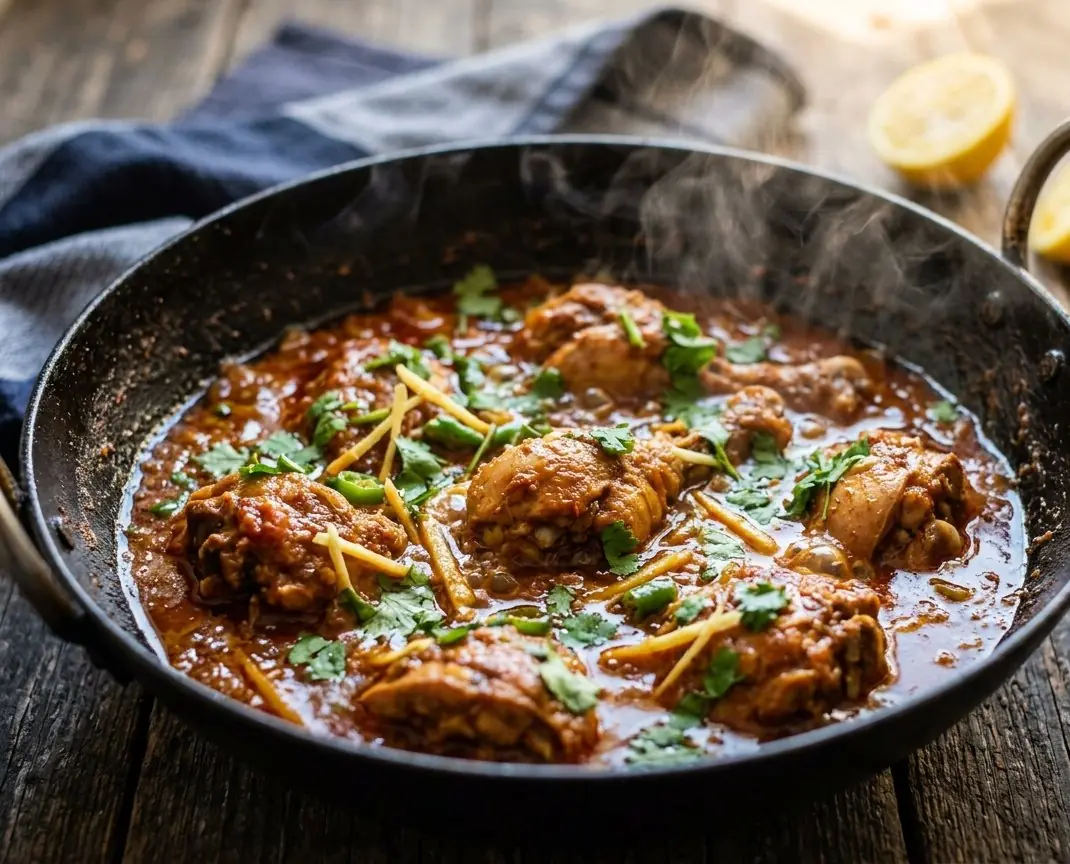
There is no official desi murgi price in Islamabad or Rawalpindi; the government rate lists cover broiler only. As of early October 2026, unofficial quotes for “desi chicken” run at about Rs 1,200–1,500 per kilogram, usually without saying whether that is live or dressed weight, and dressed birds listed online span roughly Rs 900–2,700 per kilogram. A genuine slow-grown bird lands in the upper half of that spread, or above it.
That is less tidy than a single “rate today”, but it is the honest answer. The rest of this guide shows how to turn any quote into one comparable figure.
What is the desi murgi price in Islamabad and Rawalpindi in 2026?
The Pakistan Bureau of Statistics tracks live broiler every week — the national average was about Rs 341 per kilogram in the week ending 24 September 2026 — and the Islamabad Market Committee list reported in August set chicken meat at Rs 375 per kilogram, well below what the rate websites show shops charging. Neither carries a line for desi chicken. So every desi figure below is an unofficial quote, and we have marked how much weight each can bear.
| What is being sold | Quoted rate | Live or dressed? | How firm is the figure |
|---|---|---|---|
| Broiler, live, twin cities | Rs 320–365 per kg | Live | Daily-rate websites, late September 2026; they disagree by 10–15 per cent |
| Broiler meat | Rs 455–520 per kg | Dressed | Same websites, same caveat |
| “Desi chicken” on rate websites | Rs 1,200–1,500 per kg | Usually not stated | Weak: the figures look static and do not say which bird |
| “Desi chicken” in online shops | about Rs 900–2,700 per kg | Sold dressed; weight basis not always clear | Weak: a handful of listings seen on 1 October 2026, not a survey |
The broiler baseline itself moves a great deal: press reports put chicken meat at around Rs 800 per kilogram in the twin cities in Ramazan 2025 and Rs 620–700 in Rawalpindi before Eid in March 2026, against roughly Rs 455–520 now. And a threefold spread under the single label “desi” is the clearest sign that the word is covering several different birds.
Is the desi chicken rate per kg quoted for live weight or dressed weight?
Ask, because the two are never directly comparable. A zinda (live) rate is charged on the whole bird — feathers, blood, head, feet and innards included. A dressed rate is charged on what is left. With broiler, where both rates are published, meat typically sells at about 1.4 to 1.5 times the live rate on the same day, as the two broiler rows in the table above show. That multiple is dressing loss plus the butcher’s margin.
A desi quote of Rs 1,200 per kilogram live and one of Rs 1,800 per kilogram dressed can be roughly the same price for the same bird. Most “desi murgi rate today” pages, and most desi chicken price listings for Rawalpindi and Islamabad, do not say which one they mean.
How much meat does a desi murgi actually yield?
Less than the live weight suggests, and less than a broiler. Dressing percentage is carcass weight divided by live weight. University extension figures put commercial broilers at 70–75 per cent and slow-growing or heritage birds at 67–69 per cent; studies of South Asian native breeds report anywhere from about 62 to 74 per cent depending on breed, sex and age. Those native-breed studies are Indian, not Pakistani, so treat the mid-to-high 60s as a working figure. A worked example:
- Live weight. An adult desi cockerel weighs about 1.6 kg and a hen about 1.2 kg (University of Veterinary and Animal Sciences, Lahore).
- Dressed, skin on. At 62–69 per cent, the 1.6 kg cockerel gives roughly 1.0–1.1 kg of carcass.
- Skinned. In our experience most poultry shops here remove the skin, which takes the take-home weight somewhat under a kilogram.
- Boneless. A ready-to-cook carcass is around 60 per cent meat and 40 per cent skin and bone, so expect roughly 600 g of boneless meat at best.
- What it cost. At Rs 1,200 per kilogram live, that bird is about Rs 1,900, which works out to roughly Rs 1,750–1,950 per dressed kilogram skin on — nearer Rs 1,900–2,150 once skinned — before any cutting charge.
Even genuine desi birds vary. A Poultry Research Institute Rawalpindi study found significant differences in dressing percentage between desi colour varieties of the same age. The bones are not waste, either: the carcass is what a desi murgi yakhni is built on.
Why does the desi murgi rate differ so much from one poultry shop to the next?
Partly because nobody notifies a rate, so each shop sets its own. Mostly because the birds differ. Rural poultry supplies only about 5 per cent of Pakistan’s poultry meat, going by the Pakistan Economic Survey 2025–26, so a village-raised bird is scarce at a city counter. What fills the gap, in our experience, is often a shed-raised bird of the breeds and crosses the trade calls Golden and Misri, or a spent commercial layer from an egg farm.
Weight is the quickest pehchan. A Misri-type cockerel reaches about 2 kg and a Golden-type 3 kg or more, against 1.6 kg for a desi cockerel. A “desi” bird well over 2 kg live is therefore more likely a cross than an asli village bird. The other shop-counter checks — fat, shanks, the seller’s answer about age — are in desi murgi vs broiler.
Per kg or per bird: how do you compare two quotes fairly?
Convert everything to one number: rupees per dressed kilogram, as the bird reaches your kitchen.
- A live per-kg quote. Multiply the rate by the live weight, then divide by the dressed weight you take home. Ask the shop to weigh the bird again after dressing.
- A dressed per-kg quote. Ask whether the weight is skin on or skin off, and whether neck and giblets are on the scale.
- A per-bird quote. Divide the price by the dressed weight. One online listing we saw offered a bird of about 1.75 kg for Rs 1,600. If that is dressed weight, it is roughly Rs 915 per kilogram, and a heavier carcass than a 1.6 kg live desi cockerel can give; if it is live weight, the dressed rate is nearer Rs 1,400. It was not clear which.
- The extras. Add any cutting charge and delivery before comparing.
What does a fair desi murgi rate signal — and what does a cheap one?
These bands are our own reading of the figures above, per dressed kilogram, as of October 2026, not a notified rate.
- Rs 455–520: broiler, honestly priced.
- Under about Rs 1,000 sold as “desi”: most likely a shed-raised cross or a spent commercial layer. A bird fed for months to finish at a kilogram is hard to sell this cheaply.
- Roughly Rs 1,000–2,000: where the rate-website figures land, before or after converting a live quote to dressed weight. It could be a fairly priced crossbreed or a genuine bird bought live; the weight and the seller’s answers tell you which.
- Above Rs 2,000: the top of the online listings we saw, and where our own price sits. A high price is not proof of anything — ask how the bird was raised and for how long.
The same rule holds as in our desi anday price guide: price can rule a bird out, but it cannot rule one in.
Where does the Barakaat Farms desi murgi price sit?
For what it is worth, our whole desi chicken is a flat Rs 2,650 per dressed bird — a karahi cockerel or a yakhni hen, any cut — and skin on adds Rs 300. A bird weighs roughly 800–900 g dressed and skinless, bone in, so that is about Rs 2,950–3,300 per dressed kilogram. It is well above the rate-website figures and above the dearest online listing we saw. We are not the cheap option.
What accounts for the gap: the birds are raised slowly on open ground — the karahi cockerels for six to eight months, the yakhni hens for far longer, since they are retired layers — and the price is for a skinless, dressed bird with cutting included. Delivery is Rs 350 flat, free on orders over Rs 3,500, and the bird is delivered the day after you order; orders close at 8pm (delivery areas in Islamabad and Rawalpindi). We hold no certificates; visitors are welcome at the farm instead.
Does the desi murgi rate change through the year?
Probably, but nobody measures it, so what follows is reasoning and not data. Broiler sets the mood of the whole market: a poultry association official was quoted in March 2025 saying demand rises about 40 per cent in Ramazan while supply stays short. When broiler climbs, desi quotes probably follow. Winter is the other likely pressure point — yakhni season, when a desi bird is in demand for a warming winter broth — though we found no reliable figures for a winter premium.
The short version: there is no notified desi murgi price in Islamabad or Rawalpindi, only quotes. Ask whether the rate is live or dressed, skin on or off, and what the bird weighs. Convert it to rupees per dressed kilogram. Expect a genuine slow-grown bird to cost several times the broiler rate, be wary of “desi” under about Rs 1,000 a kilogram, and remember that a high price proves nothing by itself.
Try them yourself
Six-egg trial pack, Rs 300, delivered anywhere in Islamabad or Rawalpindi.